Thursday, 31 August 2023

Big Park Flora Survey 2023. Stage 1. 1

 It is the end of May and the survey has started. There are several ways in which you can carry out the survey, firstly, you can just simply walk and identify and enjoy the wild flowers and plants, secondly, you can take part in the 'structured walk" survey. To do this, you select one of the areas shown on the map below and walk a very large W, as you walk you stop every 5 m or so, look around you and record the plants you see, walk on another 5 m and do the same until you have completed 10 points making up the W. If you wish to do this part of the survey there is a specially constructed sheet to record on and it can be forwarded to you on request. It is this data which would enable us to properly assess the quality of the grassland. Below you will see a gridded map on which I have outlined the survey areas, these are based on what I already know and in particular the type of soils which are very variable on the Park.


To help with identification of the flowers, here are a series of photographs of those which are on bloom now. I will keep coming back as the summer progresses and add to the list.


The top flower is the Bulbous Buttercup with turned back or reflex sepals or bud leaves. The bottom flower is the Meadow Buttercup which is generally a taller plant and the sepals are not bent back.

The second is the Pignut. It is not a very tall plant and can get confused with Cow Parsley. The Pignut is shown first along with a close-up of the flower head. A magnifying glass or hand lens would be a very useful acquisition to take a close look at the magnified beauty of plants.


                                                           And now the Cow Parsley.


                                Note the coarser, fernlike leaves and the asymmetrical flowerheads.

Next is a relative of the Dock which is the Common Sorrel. Once again, it has surprisingly beautiful and very much overlooked flowers.


One of the indicators of very old grassland is the Field Woodrush. This has now been on flower for some weeks and the photograph shows the brown 'nutlet seeds'. Because it came on flower earlier it is now been overtaken by other plants and will need to be searched for carefully.


A beautiful little blue flower growing low down is the Common Speedwell.


Cowslips have now set seedheads but look carefully for the clumps of leaves because they will gradually die down as the season and advances.


We can expect to see both red and white Clover as the season moves on but at the moment it is just the Red Clover on bloom.


The next to flower is one of the Cranesbill family, so-called because of the shape of the seed head. They are difficult to pin down to an exact identification.


At the moment, the Yarrow can only be found in the form of its fernlike leaves that we can find the white flower later on.


                                            This is the Hoary or Ribwort Plantain. 


Now it starts to get a bit more difficult with the grasses. The first one is the Soft Brome.


                                                  Next is the Meadow Foxtail grass.


And finally, in this first post, we shall be looking for what we call Negative Indicators. All the ones that have gone before are Positive Indicators because they are showing that the grassland is in good health. Negative Indicators show that the grassland could be deteriorating and one of the first ones of these to keep a look out for and record is the Creeping Thistle. It is actually a good nectar source for butterflies but can start to take over the grass sward.


Post settings Labels No matching suggestions Published on 5/22/23 4:01 PM Permalink Location Options Post: EditPosts moved to Trash

Tuesday, 25 April 2023

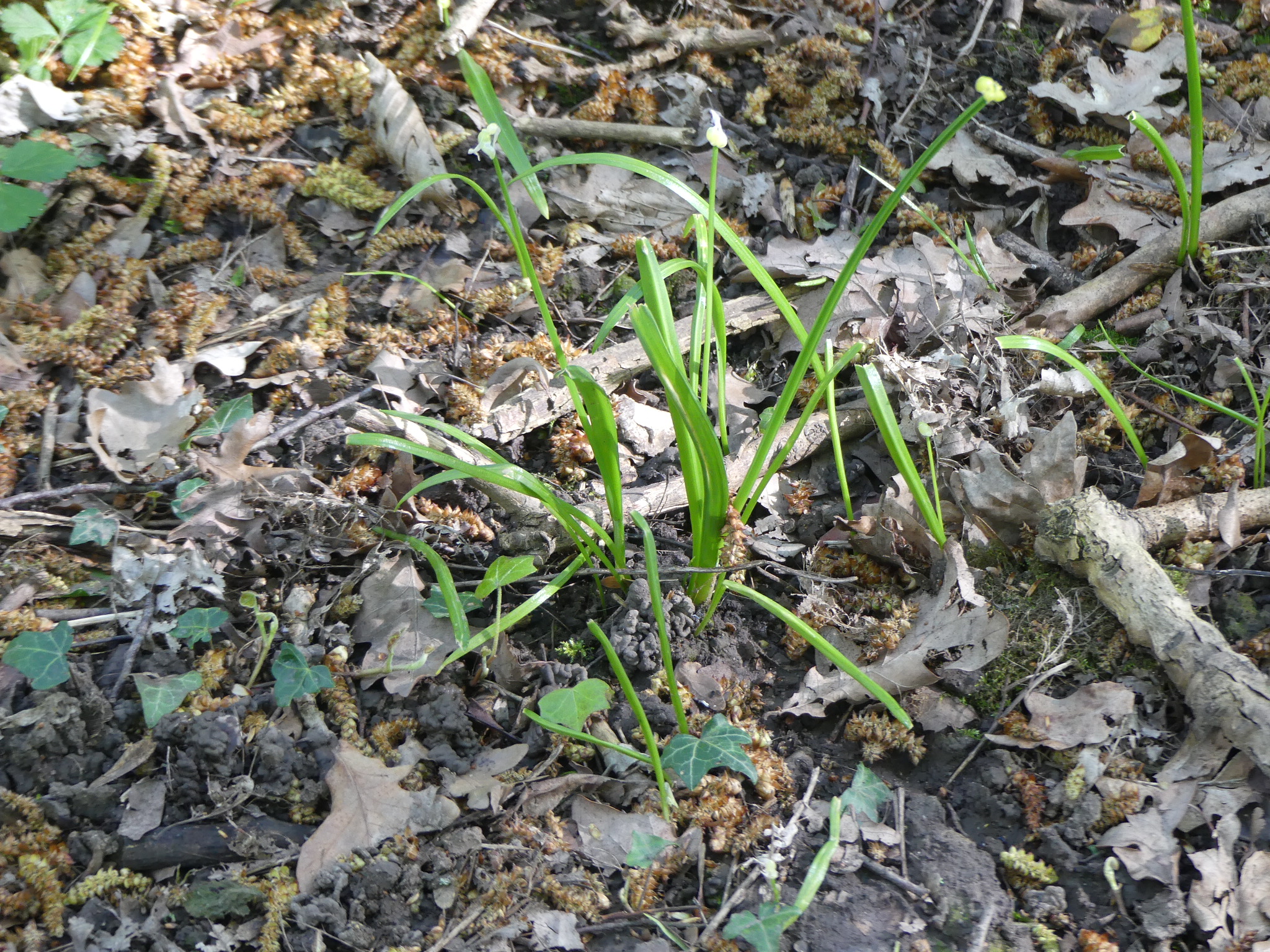
Invasion of the Few Flowered Leek.

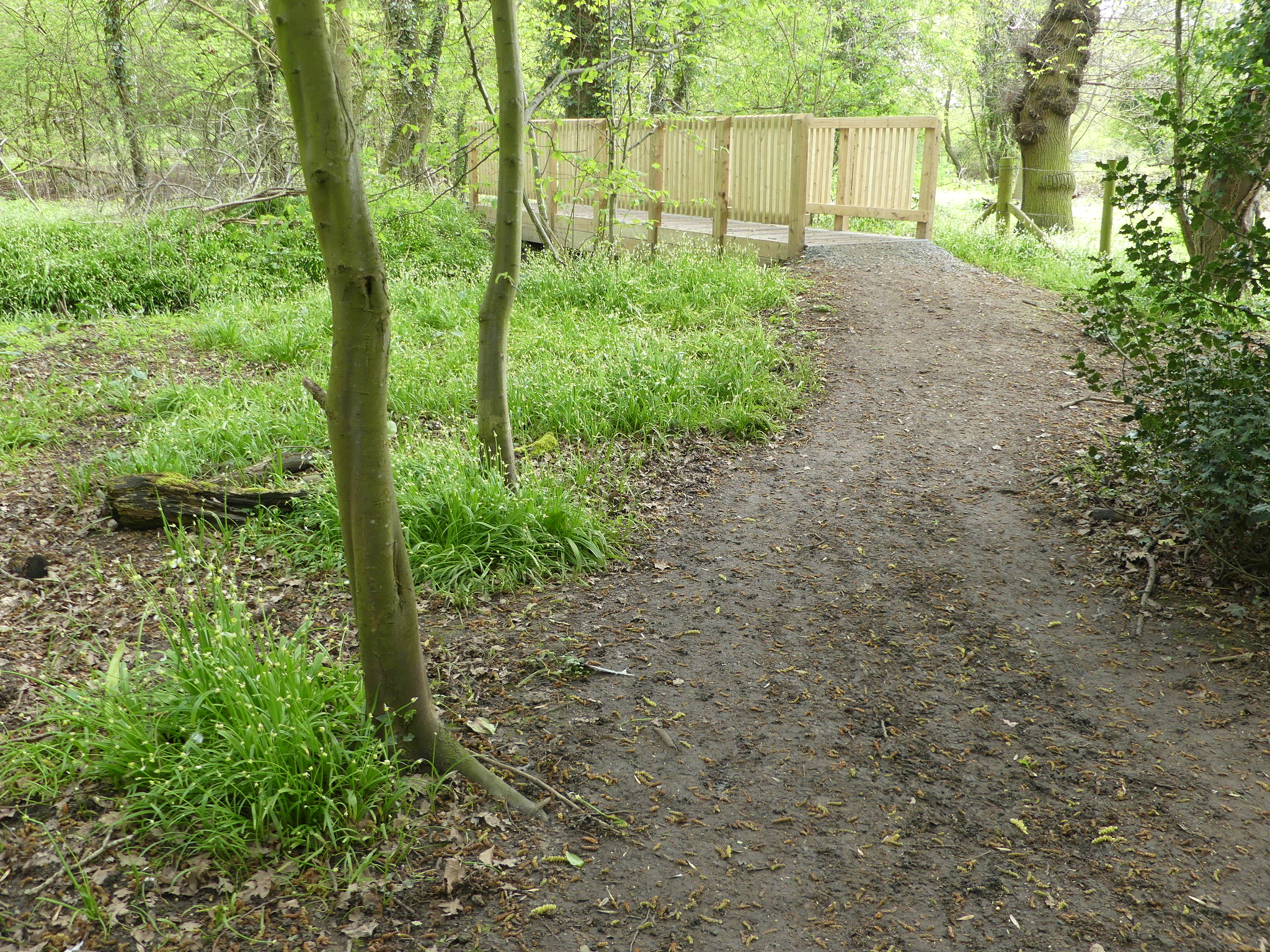
 Few Flowered Leek/Garlic  - Alium paradoxum,  is well established in the north west corner of the Park. See the area marked in red.


This plant is a native of the Caucasus and probably came to this country along with imported potted plants. In our case, it may well have come from the Rivers Nursery where it is also established. It is an almost perfect invasive species . It does not have proper flowers and does not need pollinating in order to reproduce, instead, it produces firstly a prolific number of 'bulbils' in the flower head and secondly offsets from the main bulb in the ground. Nothing eats it (apart from humans!) because it has a strong smell and is distasteful. And lastly, it forms such dense clumps that it shades out any other plant including native ones which should be there.

The 'flower' and bulbils.


Bulbs in the ground and 'offsets'.


Masses of bulbs in the ground lead to a very dense clump which excludes other vegetation.


Invasion starts, presumably from a is single bulbil from a flower. Initially there is a single leaf but as the bulbs multiply in the ground the size of clump steadily increases. A single bulbil in the centre of native Dogs Mercury will soon overwhelm the plant that should be growing there.


Where this plant is growing is the oldest section of woodland on the Park and probably pre-dates the Park itself. If we value the native woodland flora then not trying to control it is not an option. Efforts so far have included hand digging and pulling- it comes up quite easily and cutting with a hand scythe and collecting up the leaves and flowerheads which may weaken the bulbs and will prevent bulbils falling on the ground. It will be best to try and remove plants near to the path because it is known that the bulbils can be transported on boots and dogs paws.  A realistic solution might be to not work on eradication but to limit the spread by making it one of the Work Party tasks on an annual basis. A survey of the native flora will be carried out so we have got a baseline to work to.


Thursday, 23 February 2023

Cedar of Lebanon age and growth record. Feb 23rd 2023.

 Before the Great Gale 1986/87 there was a stately Cedar of Lebanon in a prominent position overlooking the Osier Bed. The tree was substantially damaged by the gale and felled to make it safe and convenient. Today, I made a rubbing of the trunk to show the growth rings. Planting date comes out at about 1880+ or minus excepting it stopped growth in the mid-1980s.


Friday, 21 October 2022

October 2022.

 . What a strange year it has been weatherwise. Now the Park has recovered somewhat from being totally parched off, and we have had a small amount of rain we have the peculiar spectacle of plants on flower at the same time as they are on fruit, as can be seen from these blackberries, where we have got flowers and fruit on the same plant.


There are some interesting sheet webs in these same bramble patches.


Where the bark mulch was put down over the muddy areas it seems to have created a new type of habitat. Moles are busy burrowing underneath it, Docks, Stinging Nettles and Thistles have been able to seed and root into it and there are various types of toadstool growing, probably on the wood as well as from the soil underneath.


Thursday, 30 December 2021

What to look out for on the Park in January.

 Along Oak Walk, find a Lime tree, and Ash tree and a Horse Chestnut tree. Identify them from their bark and buds.

Lime bark and bud.

Ash bark and bud.

Horse Chestnut bark and bud.

Find areas of molehills. It will be one mole per area of molehills. So how many moles to think we might have on the Park?

Find the old veteran Lime tree which has finally collapsed. Find the mistletoe still growing on one of the live limbs.


Look for signs of rabbits. Find these small holes that they have dug and marked with dung pellets. Look out for areas of dead grass which they marked with pellets and urine. See if you can identify the rabbit trackway across the grassland.


Find places where rabbits have stripped the bark from small fallen branches.


Listen for a Robin singing. Copy the link into your browser to hear a Robin singing on the Park.
https://youtu.be/ZJupAjJOgQc


Find an Elder Tree (look in the top left corner of the dog training enclosure) and look for the first signs of bud burst.