Tuesday, 25 April 2023

Invasion of the Few Flowered Leek.

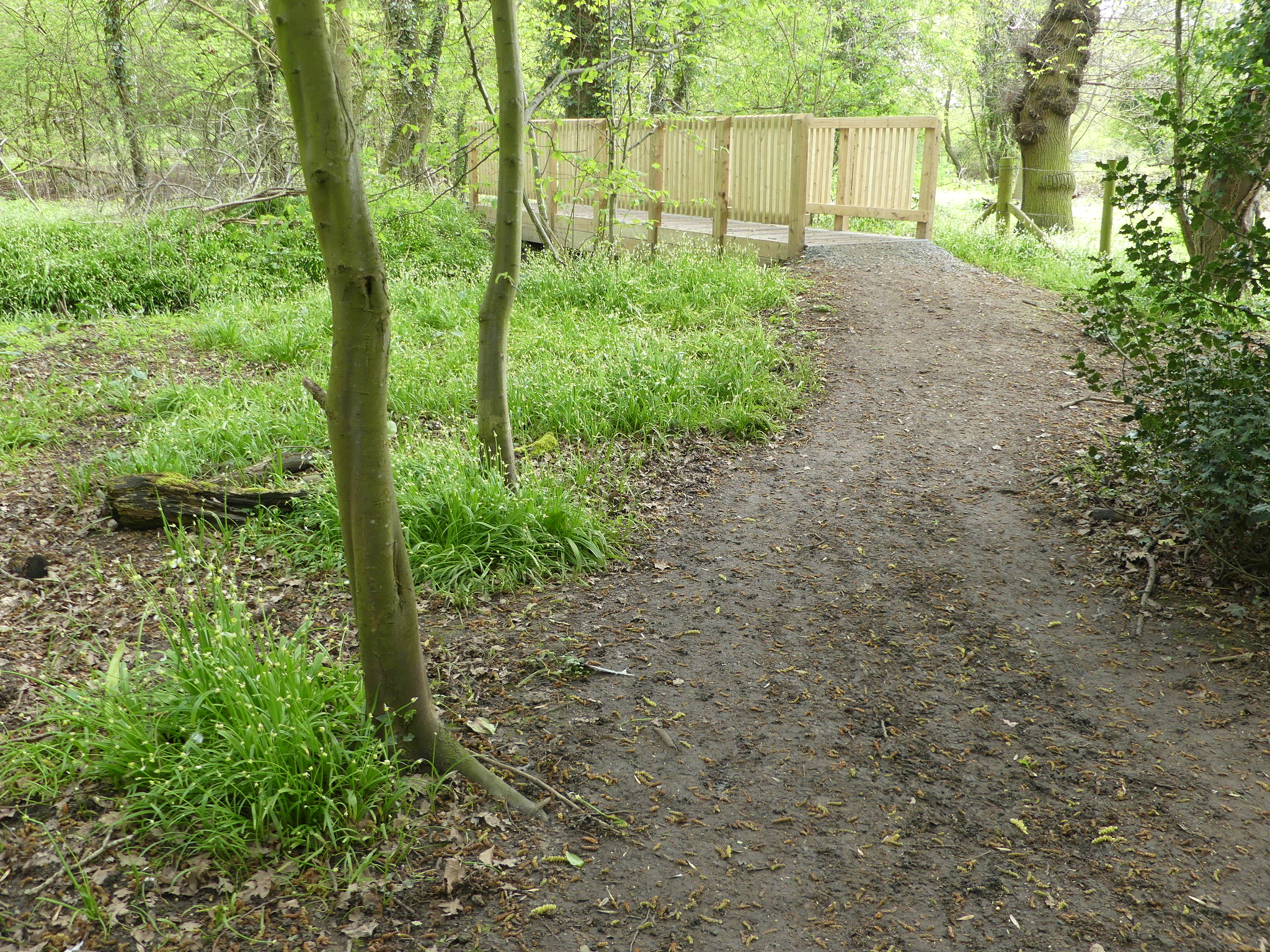
 Few Flowered Leek/Garlic  - Alium paradoxum,  is well established in the north west corner of the Park. See the area marked in red.


This plant is a native of the Caucasus and probably came to this country along with imported potted plants. In our case, it may well have come from the Rivers Nursery where it is also established. It is an almost perfect invasive species . It does not have proper flowers and does not need pollinating in order to reproduce, instead, it produces firstly a prolific number of 'bulbils' in the flower head and secondly offsets from the main bulb in the ground. Nothing eats it (apart from humans!) because it has a strong smell and is distasteful. And lastly, it forms such dense clumps that it shades out any other plant including native ones which should be there.

The 'flower' and bulbils.


Bulbs in the ground and 'offsets'.


Masses of bulbs in the ground lead to a very dense clump which excludes other vegetation.


Invasion starts, presumably from a is single bulbil from a flower. Initially there is a single leaf but as the bulbs multiply in the ground the size of clump steadily increases. A single bulbil in the centre of native Dogs Mercury will soon overwhelm the plant that should be growing there.

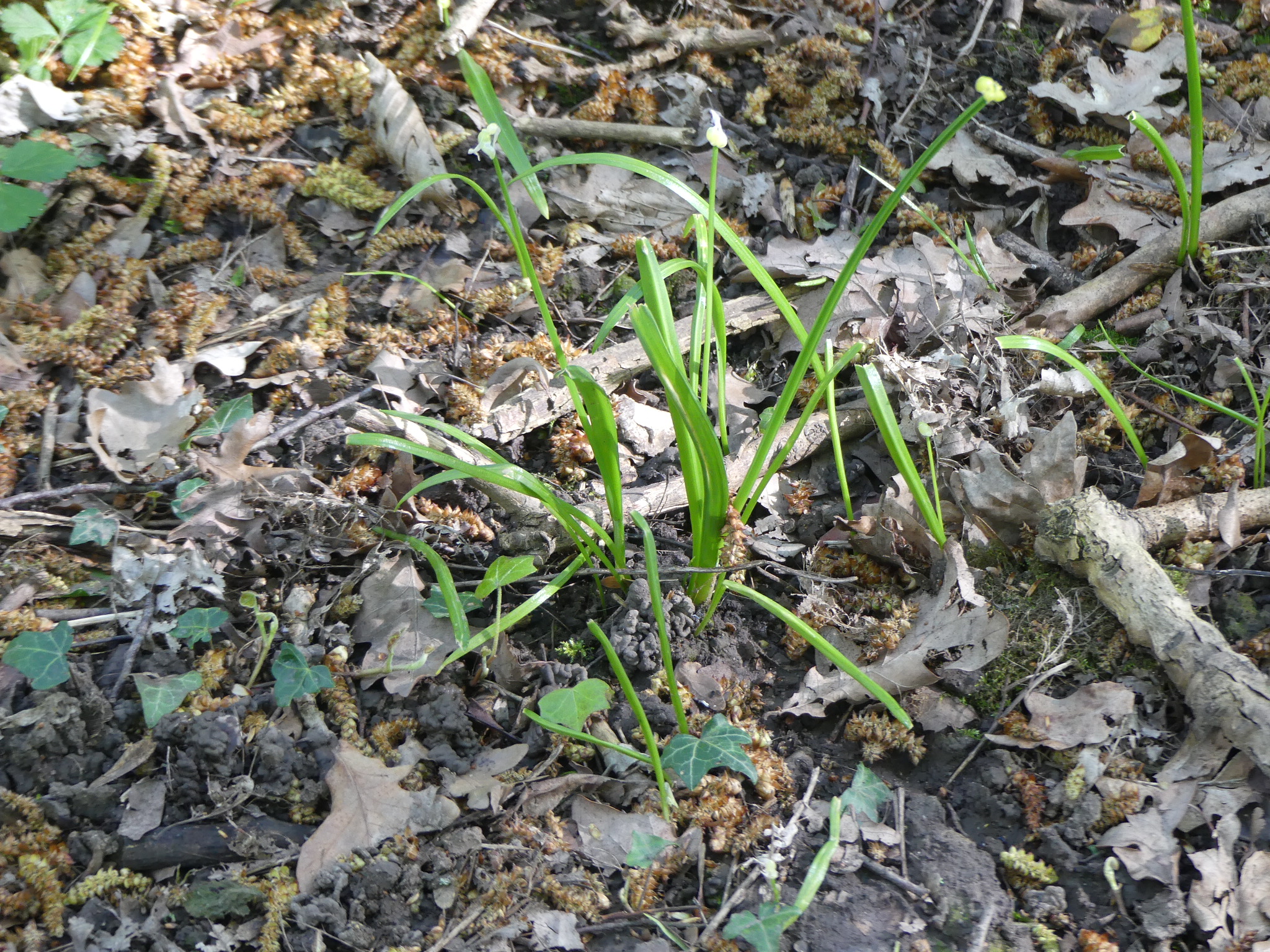


Where this plant is growing is the oldest section of woodland on the Park and probably pre-dates the Park itself. If we value the native woodland flora then not trying to control it is not an option. Efforts so far have included hand digging and pulling- it comes up quite easily and cutting with a hand scythe and collecting up the leaves and flowerheads which may weaken the bulbs and will prevent bulbils falling on the ground. It will be best to try and remove plants near to the path because it is known that the bulbils can be transported on boots and dogs paws.  A realistic solution might be to not work on eradication but to limit the spread by making it one of the Work Party tasks on an annual basis. A survey of the native flora will be carried out so we have got a baseline to work to.


Thursday, 23 February 2023

Cedar of Lebanon age and growth record. Feb 23rd 2023.

 Before the Great Gale 1986/87 there was a stately Cedar of Lebanon in a prominent position overlooking the Osier Bed. The tree was substantially damaged by the gale and felled to make it safe and convenient. Today, I made a rubbing of the trunk to show the growth rings. Planting date comes out at about 1880+ or minus excepting it stopped growth in the mid-1980s.


Friday, 21 October 2022

October 2022.

 . What a strange year it has been weatherwise. Now the Park has recovered somewhat from being totally parched off, and we have had a small amount of rain we have the peculiar spectacle of plants on flower at the same time as they are on fruit, as can be seen from these blackberries, where we have got flowers and fruit on the same plant.


There are some interesting sheet webs in these same bramble patches.


Where the bark mulch was put down over the muddy areas it seems to have created a new type of habitat. Moles are busy burrowing underneath it, Docks, Stinging Nettles and Thistles have been able to seed and root into it and there are various types of toadstool growing, probably on the wood as well as from the soil underneath.


Thursday, 30 December 2021

What to look out for on the Park in January.

 Along Oak Walk, find a Lime tree, and Ash tree and a Horse Chestnut tree. Identify them from their bark and buds.

Lime bark and bud.

Ash bark and bud.

Horse Chestnut bark and bud.

Find areas of molehills. It will be one mole per area of molehills. So how many moles to think we might have on the Park?

Find the old veteran Lime tree which has finally collapsed. Find the mistletoe still growing on one of the live limbs.


Look for signs of rabbits. Find these small holes that they have dug and marked with dung pellets. Look out for areas of dead grass which they marked with pellets and urine. See if you can identify the rabbit trackway across the grassland.


Find places where rabbits have stripped the bark from small fallen branches.


Listen for a Robin singing. Copy the link into your browser to hear a Robin singing on the Park.
https://youtu.be/ZJupAjJOgQc


Find an Elder Tree (look in the top left corner of the dog training enclosure) and look for the first signs of bud burst.

Sunday, 19 December 2021

Pishiobury Park. Springhall Field Hedge Project.

 The old Field hedge around Spring Hall Field is largely derelict. There are lots of gaps and places where failed hedge shrub plantings have taken place some years ago. There are some older Hawthorns and old Hazels. It is possible that the Hazels go back to the time of Thomas Rivers when they were planted to provide sticks and poles for use on the Nursery. The plan is to carry out a biodiversity study of the hedge, coppice the Hazels and plant up the gaps with young shrubs next year. A short film on You Tube shows wasps and bees feeding on the Ivy over growing some of the Hawthorns. The first work party was on 16th of December where we have started coppicing the Hazels and clearing away some of the dead wood to make eco-piles.

https://youtu.be/MDU-HnE-sr4      for wasps and bees feeding on the Ivy.

Old Hazel with barbed wire inter- grown.


                            The derelict hedge.


Old Hawthorn covered in Ivy


                    Failed earlier plantings.


We have got to be careful when coppicing the Hazel.


            Six of us attended the first work party.


Starting work.


We are going to have to cut the Hazels quite high to avoid the barbed wire.

Making sure the worksite is left neat and tidy ready for the next time.