Tuesday, 19 October 2021

19th October 2021.

Autumn is steadily progressing and the leaves are starting to come off the trees. It will be interesting to see what happens to these leaves in the coming weeks as the earthworms start to get busy and drag them down into their tunnels. This is all part of the food chain and food web on the Park.


                                                                        Hornbeam.


                                                                        Sycamore.


                                                                                Beech.


                                                             Ornamental Plum.

.The cattle are supposed to be going off the Park in the next few days and they are making the most of clearing up the last of the conkers.


The grass has been mown because the cattle were not keeping pace with it and one of the terms of the Higher Level Stewardship is that the grass be reduced to a height of about 10 cm by the end of the grazing season.


The first of the fungi are starting to appear. I am not going to try and name many of these because identification is difficult. The role of fungi is that they break down organic matter either in the soil or in dead tree trunks. The nutrients are then returned to the soil as part of the food chain.


Moles are starting to get busy and it is interesting that there are not as many on the Park as you would expect. I think this is largely because most of the soils on the Park are very difficult to dig in which is why Moles are found in the north-west corner, by the Spring and all the way along the bottom of the sledging slope adjacent to the Osier Bed.


The Friends are currently planning a Bat Roost Box Project and here are five photographs of lightweight concrete boxes which are already on trees in the Park. We are hoping to be able to add some more ones in the not too distant future.


Just to demonstrate the biodiversity we have on the Park here is a shot of a section of Ash tree which has got two different types of Moss and four different types of lichen growing on it.


Birds are difficult to photograph but today there was a flock of Jackdaws taking advantage of the blustery wind. There were also some Jackdaws, Carrion Crows and Magpies feeding where the grass has been cut.


And finally, this is a rarity this year an actual Acorn in a year when the Acorn crop seems to have totally failed. This will have consequences for animals which rely on these nuts for food as part of the food chain.

Monday, 4 October 2021

Archive pictures from the 1970s.

 Here are some scanned 35mm colour slides taken of the Park in the 1970s.

The first one is a view looking north towards Nursery Wood. On the sledging slope there was a landscape Elm and a Horse Chestnut in full bloom. In the distance you can see the large Cedar of Lebanon and Nursery Wood.


Now the Horse Chestnut has fallen over. It died because the bark was eaten off by horses which used to graze on the Park. The Elm tree has gone because it caught Dutch Elm disease. Nursery Wood has disappeared because all the Elms have been cut down and in the next picture you can see a herd of black-and-white cattle in the distance which used to graze on the Park.


As ever, the Park was a popular place for sledging. You can see snow on the roofs of houses in East Park.


Here are some landscape Elms near to the bridge and ditch. The bridge was not there of course. The Park lost a lot of landscape trees at this time. The next picture shows a huge tree that has been felled in the South East corner of the Park and the sawn trunk. The timber was perfectly sound but the trees had all died because of the fungal infection spread by the bark beetles.


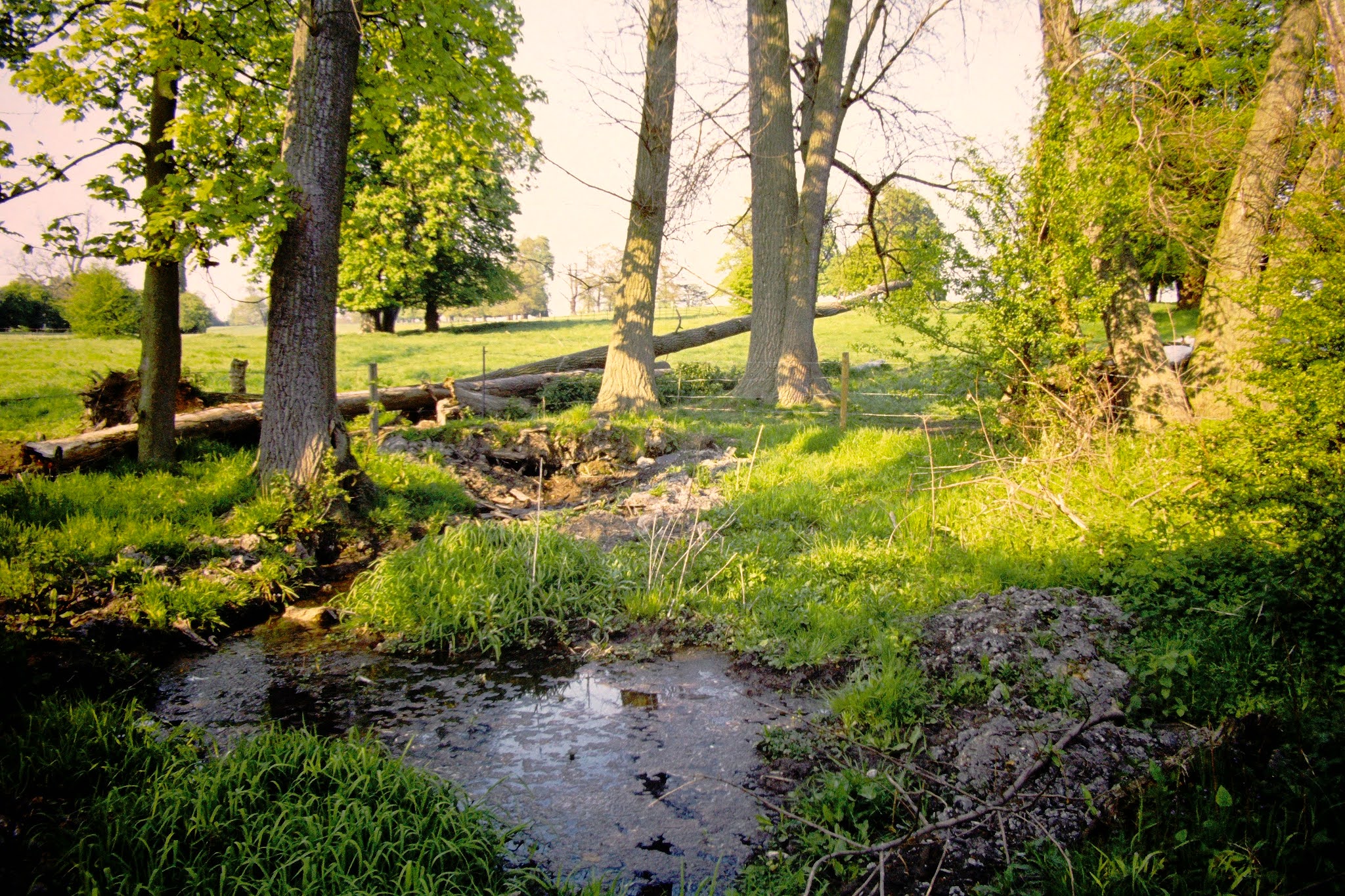
This is the spring area which at this time was completely open to the cattle and was surrounded by large Poplar trees.
And finally, here is the newly constructed car park when the Park was purchased by East Herts District Council in 1980.


Monday, 27 September 2021

Monday 27th September 2021.

 This may well be one of the last mild early autumn days on the Park. A few of the trees are just starting to show autumn colour.


I found a Queen bumblebee nestling down into the grass where she will spend the winter buried in the grassroots.


 Surprisingly, there were some dragonflies hawking about in the sunshine. I think that they were faded Brown Hawkers and must be near the end of their lifespan.


I was pleased to find a native six spot Ladybird.


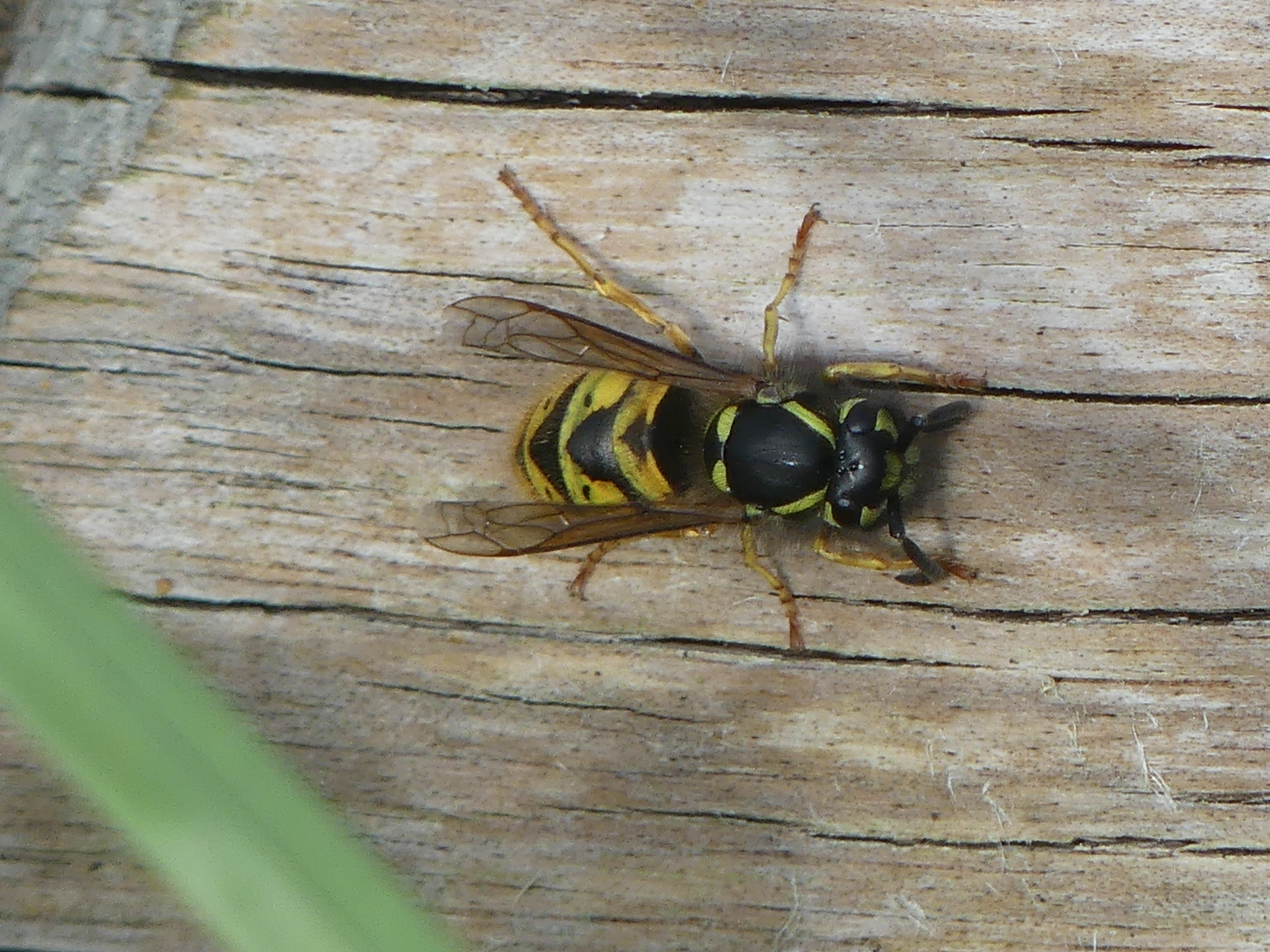
And on a sun warmed log there were a Wasp, and a flesh fly.


I spotted a Comma Butterfly feeding on one of the few remaining Thistle flowers.


One of the older Oak trees has got a large bracket fungus growing out of the base and it also has two bat roost boxes.


This year, the Oak trees have not produced hardly any acorns. They do this occasionally as not every year is a full fruiting year. Any acorns that did form have been parasitised by a small wasp which lays an egg in the flower bud causing it to form a Knopper Gall, the wasp larva feeds inside the gall.


A familiar gall on Oak is the Oak Apple. You do not seem to notice them until the wasp grub has hatched and left through a tiny circular hole. Once again the adult wasp lays eggs into the developing buds which developed into the 'Apple'.


Another two galls on Oak leaves are the pretty Silk Button Gall once again caused by a tiny wasp and the Spangle Gall.


And finally I couldn't leave without taking a picture of some of the beautiful, bright Hawthorn berries we have on the Park this year.


Friday, 17 September 2021

 History Group investigation Wednesday 1st September 2021.

The group decided to investigate a rectangular hollow just to the east of Oak Walk. The hollow shows up clearly on LIDAR.


We used a soil auger to make boreholes along a 40 m transect across the hollow.


As the sediments were extracted we laid them out in lengths of rainwater guttering. 


We classified the soils using a Munsell Soil Colour Chart and the average value was 10YR 6/6. We also carried out a 'Dirty Hands Test' which showed us that the soil is a silt/clay loam.

The conclusion was that most of the area is underlain by Chalky Boulder Clay which has been very deeply weathered in post glacial times. There appears to have been a thick layer of gravel laid over the top of the clay along the line of Oak Walk. We could find no evidence of either a pond or a garden as had been suggested. The conclusion was that soil had been moved from the sloping ground to the east and used to level up Oak Walk to make it easier, safer and more comfortable for coaches, carriages and carts. See diagram.